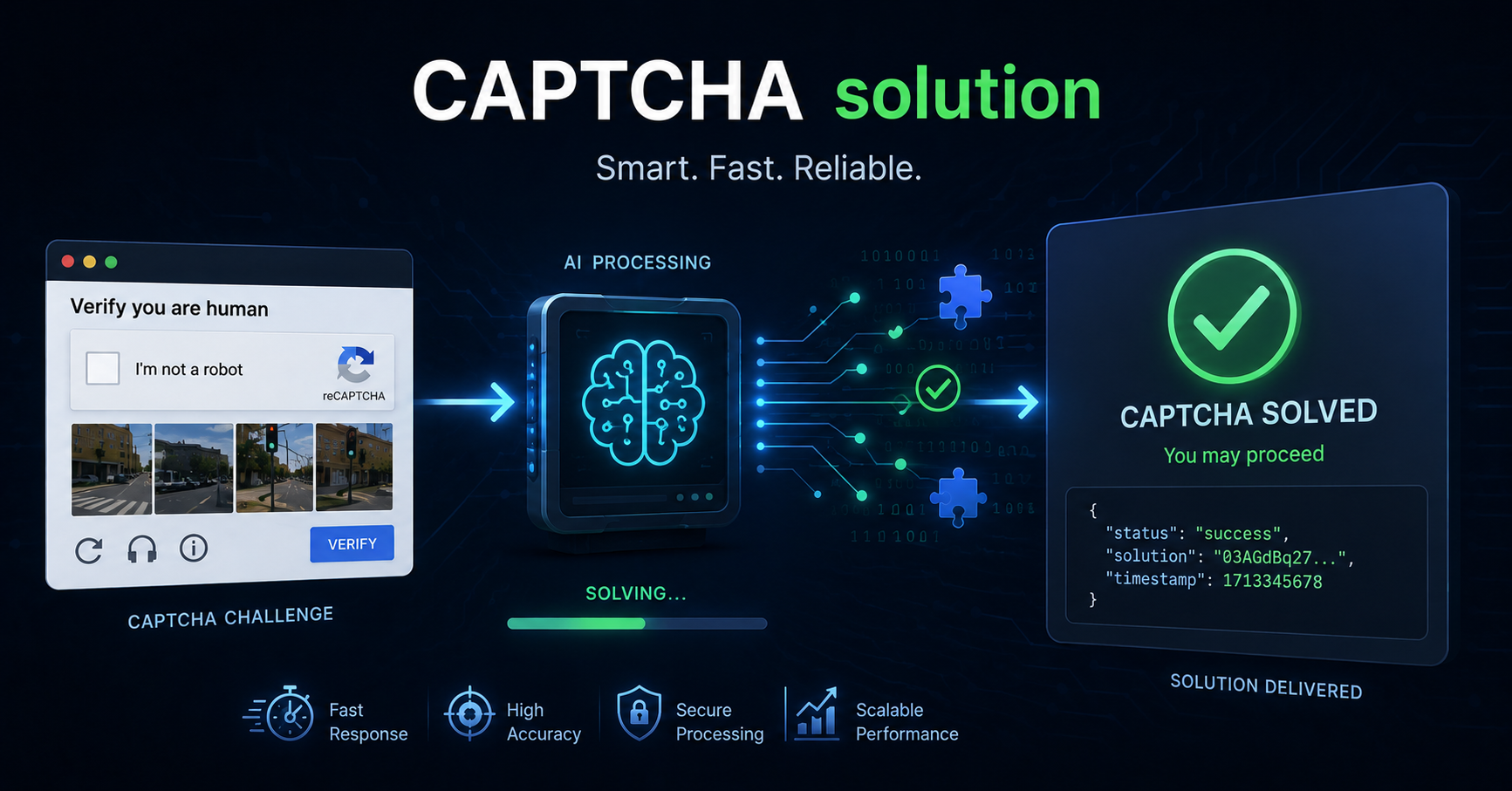
People rarely think about verification systems until they stop working smoothly. One failed image challenge is forgettable. Five in a row feels personal somehow. That’s probably why discussions around a CAPTCHA solution no longer stay inside technical circles — regular users run into these systems constantly now, often without understanding why the friction suddenly appears.
And honestly, the experience changed a lot over the last few years. Not gradually enough to ignore, but slowly enough that most people adapted without noticing.
Browsing Used To Feel More Direct
There was a time when the internet felt surprisingly straightforward. Open page. Click button. Submit form. Done.
Now there’s almost always an invisible layer sitting between action and access.
A person visits a website and gets evaluated immediately. The system checks movement patterns, browser behavior, network reputation, session timing. Sometimes the visible CAPTCHA challenge appears only after dozens of hidden signals already shaped a trust score in the background.
What’s strange is how unpredictable the results can feel from the user side.
You can spend hours browsing normally from home without seeing a single challenge. Then suddenly a hotel Wi-Fi network, public connection, or even an overloaded mobile browser triggers endless verification loops. Same person. Same behavior. Completely different reaction from the system.
That inconsistency changes the emotional tone of browsing more than people admit.
Not dramatically. Just enough to create low-level irritation.
Some Friction Feels Reasonable — Some Doesn’t
Most people understand why verification exists. Spam, automated traffic, fake registrations, scraping — none of that is abstract anymore. Even ordinary users encounter bots regularly now.
But acceptance disappears quickly when security starts interrupting harmless behavior.
I once watched someone trying to buy concert tickets refresh a page too aggressively during a queue delay. Within minutes, the system began treating every action as suspicious. More image puzzles. More reloads. More failures despite correct answers.
Eventually the person slowed down completely, almost nervously, clicking as if the website itself might become angry again.
That’s the subtle thing verification systems do. They don’t only filter traffic. They shape behavior.
And businesses notice this too, especially platforms handling high-volume interaction. Conversations around CAPTCHA solution for business environments often revolve less around blocking abuse and more around balancing trust with usability. Too much friction drives people away quietly. Not with dramatic complaints. They just stop trying.
That’s harder to measure.
The Internet Quietly Became More Suspicious
A lot of modern verification works through probability rather than certainty. Systems don’t “know” someone is suspicious. They estimate risk based on patterns.
The problem is that real human behavior is messy.
Someone opens fifteen tabs while comparing products. Another user types unusually fast because they work with data entry all day. A tired person repeatedly mistypes passwords late at night. None of these actions are inherently suspicious, yet pattern-based systems can still interpret them that way.
This is where things become oddly philosophical.
Because humans are inconsistent by nature, but modern systems increasingly reward consistency. The cleaner and more predictable behavior appears, the easier it becomes for algorithms to classify.
That creates a weird contradiction online. Real people often behave more chaotically than carefully designed automation.
Mentions of CAPTCHA solving solutions usually sound technical at first glance, yet underneath those discussions there’s often something simpler happening: people trying to move through increasingly restrictive systems without constant interruption.
Not rebellion. Mostly fatigue.
Invisible Evaluation Changes How Websites Feel
Some websites still use obvious image puzzles. Others barely show visible checks anymore because evaluation happens continuously in the background.
Personally, I think invisible systems sometimes feel stranger.
At least a visible CAPTCHA tells you directly what’s happening. Hidden scoring creates uncertainty instead. A page works perfectly one day and suddenly becomes hostile the next with no explanation at all.
Small details can trigger it:
- changing networks too quickly
- privacy-focused browser settings
- unusual traffic spikes
- repeated page refreshes
None of these things automatically indicate abuse. Yet systems interpret combinations of signals rather than isolated actions.
The result is subtle but noticeable. People begin second-guessing ordinary browsing behavior. They refresh less aggressively. They hesitate before retrying forms. Some even avoid opening too many tabs because previous sessions triggered endless checks.
That shift fascinates me a little because it happened almost silently. The web didn’t suddenly announce stricter trust systems. The atmosphere just changed over time.
Security Systems Are Also User Experience Systems
A lot of technical discussions separate security from usability as if they belong to different worlds. In reality, users experience them together every single second.
Nobody thinks about infrastructure while casually browsing. They only notice interruptions, delays, repeated checks, or broken flow. Which means even effective security can feel “bad” if the interaction itself becomes exhausting.
And exhaustion matters more online than people think.
Not every user becomes angry enough to complain publicly. Most simply lose patience quietly. They close the page. They postpone registration. They stop returning. Friction rarely creates dramatic exits. Usually it creates small disappearances.
That’s partly why CAPTCHA solution systems now influence much more than spam prevention alone. They affect rhythm, trust, pacing, even emotional tone during ordinary browsing sessions.
After enough years online, you start noticing how much of the internet runs on invisible negotiations between convenience and suspicion. And honestly, neither side ever fully wins.