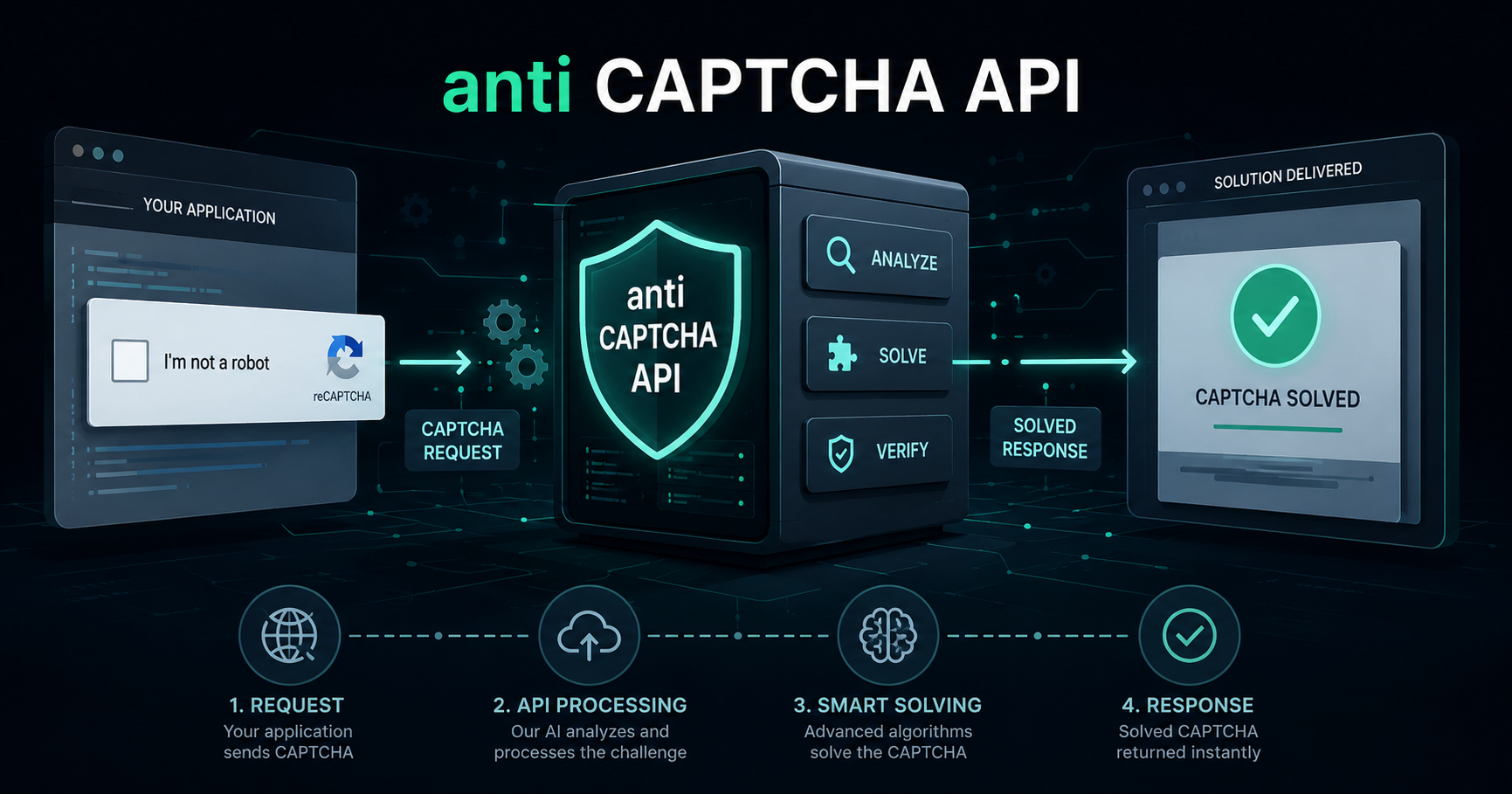
You notice CAPTCHA API systems most when something simple suddenly stops being simple. A page reloads for no reason. An account login stalls behind another image puzzle. Or a form decides that selecting buses and bicycles correctly somehow still isn’t convincing enough.
What’s interesting is that these checks used to feel temporary. Now they feel baked into the internet itself.
Somewhere Along The Way, Verification Became Constant
Years ago, CAPTCHA challenges appeared occasionally, usually after suspicious activity or unusual traffic spikes. They were interruptions, not part of the normal rhythm of browsing.
That changed quietly.
Now verification exists almost everywhere, even on pages where nothing important seems to be happening. Comment sections. Search forms. Ticket pages. Sometimes even ordinary password resets trigger layered checks running invisibly in the background.
What makes modern systems different isn’t only the puzzle itself. It’s the amount of behavior being interpreted before the challenge even appears. Mouse movement, typing speed, browser fingerprints, session history — all of it feeds into hidden scoring systems.
The strange thing is that humans are inconsistent by nature. Someone distracted by a phone call clicks differently. Someone exhausted at midnight behaves differently from the same person in the morning. Yet systems still try to reduce that chaos into confidence scores.
That’s partly why discussions around tools like an anti CAPTCHA API became more common in technical spaces. Once verification expanded beyond simple puzzles into behavioral analysis, the entire process became harder to predict.
Not just for automation. For people too.
Some Websites Feel More Suspicious Than Secure
There’s a noticeable difference between security that reassures users and security that quietly irritates them. Most people don’t mind proving they’re human once. Repeating the process four times during a normal session creates a completely different feeling.
Especially when the challenge itself feels arbitrary.
You can see this most clearly during moments when traffic surges unexpectedly:
- limited product releases
- event ticket sales
- mass account registrations
Suddenly systems tighten. Pages slow down. Verification loops appear. And real users end up behaving more desperately than the bots the system was trying to stop in the first place.
Oddly enough, that desperation becomes part of the detection pattern. Fast retries, repeated refreshes, frantic clicking — all of it can look automated.
There’s something almost circular about that.
A modern API CAPTCHA solver often exists because websites became increasingly aggressive with automated detection, while websites became increasingly aggressive because automation improved. Each side keeps reacting to the other, and ordinary users get caught somewhere in between.
The result is an internet that sometimes feels slightly paranoid.
Invisible Checks Change User Behavior More Than People Realize
Most users still think CAPTCHA systems begin when an image puzzle appears. In reality, the evaluation often starts much earlier.
A browsing session can already carry reputation signals before a page even finishes loading. IP history matters. Device consistency matters. Timing patterns matter. Even hesitation can matter.
And honestly, that creates a weird psychological effect after a while.
People start adjusting themselves to avoid suspicion. Slower clicks. Fewer tabs. More cautious browsing habits. Not consciously all the time, but enough to notice.
I once watched someone carefully pause between actions on a marketplace site simply because previous attempts triggered repeated verification screens. That hesitation had nothing to do with security awareness. It was learned behavior from interacting with systems that punished speed.
That’s where conversations around a CAPTCHA API solver become less technical and more human. Because eventually the discussion stops being about code and starts being about how systems subtly shape online behavior.
Most users never describe it that way, but they feel it.
The web used to reward efficiency. Now, in some places, efficiency looks suspicious.
There’s No Perfect Balance Between Friction And Trust
Security systems always introduce trade-offs, even when people pretend they don’t. Reduce friction too much and abuse increases. Tighten verification too aggressively and legitimate users suffer.
Neither side fully wins.
What complicates things further is that different websites define “normal behavior” differently. A person rapidly opening pages on a research forum might appear harmless there but trigger alerts somewhere else entirely. Context changes everything, yet automated systems still rely heavily on patterns.
Sometimes those patterns are surprisingly fragile.
Small things can influence outcomes:
- switching networks during a session
- using privacy-focused browser settings
- traveling between regions
- opening multiple accounts too quickly
None of these actions are inherently suspicious on their own. Together, though, they can shift how systems classify a user.
That uncertainty explains why people occasionally describe verification systems almost emotionally. Not because the technology itself is emotional, obviously, but because unpredictable friction affects trust. And once trust disappears, even small interruptions feel bigger than they really are.
Mentions of a CAPTCHA bypass API usually appear inside technical conversations, but behind those conversations sits a larger reality: people increasingly interact with online systems that continuously judge legitimacy in the background without clearly explaining the criteria.
And maybe that’s the uncomfortable part.
Not the challenge itself. The feeling of being evaluated all the time.
After a while, a CAPTCHA API stops feeling like a separate security layer and starts feeling like part of the atmosphere of the internet — invisible most of the time, noticeable exactly when things stop moving naturally.